
Mental Health on the Menu
- Faith Carini-Graves
- Nov 27, 2025
- 3 min read

Thanksgiving is more than a holiday—it’s a sensory experience tied to connection, tradition, social connections, and nourishment. But beyond nostalgia, many of the foods on a typical Thanksgiving table offer real mental-health benefits when we look at their nutritional profiles. Understanding how these foods interact with brain health can turn your holiday plate into a tool for emotional wellness.
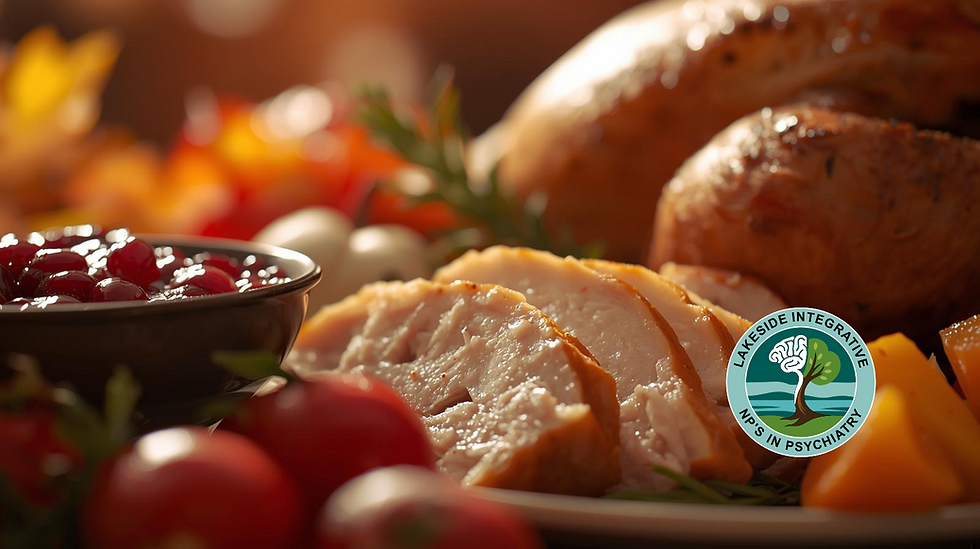
Below is a breakdown of the most common Thanksgiving foods and how they support the brain, mood regulation, and overall mental health.
🦃 Turkey: The Serotonin Supporter
Turkey gets a lot of attention for its tryptophan, an amino acid your body uses to make serotonin—a neurotransmitter involved in mood, sleep, and emotional regulation.
Benefits:
Supports stable mood
Helps with sleep quality
Provides lean protein for blood sugar stability, reducing irritability and drops in blood sugar
Nutrition: Rich in B vitamins (especially B6 and B12) that support neurotransmitter production and use.
Pro tip: Pair turkey with a carbohydrate—like stuffing or potatoes—to help tryptophan cross the blood-brain barrier more effectively.
🥔 Mashed Potatoes: The Comfort Carb With a Purpose
Potatoes are often seen as “just carbs,” but they are much more- especially when eaten whole, with skins included.
Benefits:
Carbohydrates promote serotonin release
Potassium supports stress regulation and muscle relaxation
Fiber (especially if skins are included) supports gut health—and a healthy gut is tied to better mood
Just watch the portion of butter, cream, or salt if you’re mindful of inflammation or blood pressure.
🥧 Pumpkin Pie: Mood-Boosting Micronutrients
Pumpkin is rich in beta-carotene, antioxidants, and fiber—all important for brain and gut health.
Benefits:
Antioxidants protect neurons from oxidative stress
Fiber supports the gut-brain axis and gut microbiome
Spices like cinnamon and nutmeg help stabilize blood sugar and reduce inflammation, which is so important for the brain
Nutrition: Vitamin A, magnesium, and iron.
Even with added sugar, pumpkin pie can offer more nutritional value than many other desserts.
🥗 Green Beans: Stress-Fighting Fiber and Antioxidants
A Thanksgiving staple in casseroles or steamed as a lighter side dish.
Benefits:
High in fiber, supportive of gut health
Antioxidants may reduce inflammation associated with depression
Folate supports mood and cognitive function
Green beans get extra points when prepared simply instead of drowned in heavy creamy sauces.
🍠 Sweet Potatoes: Nature’s Mood Stabilizer
Sweet potatoes offer slow-release carbohydrates and a nutrient profile supporting mental well-being.
Benefits:
Steady energy that prevents mood dips
High in Vitamin A and C for immune and neurological health
Magnesium and potassium support relaxation and stress relief
Add marshmallows if you love them—joy matters too—but consider a smaller portion as sugar spikes will affect your mood and overall brain function
🍞 Stuffing: The Comfort Food With a Gut Connection
Stuffing feels grounding for many people thanks to its warmth, herbs, and bread base.
Benefits:
Carbohydrates support serotonin
Herbs like sage, rosemary, and thyme may have calming or cognitive-supportive properties
Onions, celery, and garlic contribute prebiotic fibers that nourish gut bacteria
Even though stuffing can be rich, emotionally meaningful foods can have psychological benefits as well.
🥫 Cranberry Sauce: Bright Flavor, Brain Protection
Cranberries contain polyphenols, a type of antioxidant shown to improve brain function and reduce inflammation.
Benefits:
May support memory
Anti-inflammatory properties beneficial for mood
Supports cardiovascular health, which is directly linked to brain health
Opt for homemade if you want reduced sugar—but the traditional canned version is fine in moderation.
🥛 Gravy: The Emotional Comfort Factor
While gravy isn’t a nutritional powerhouse, warmth and flavor can be emotionally soothing.
Psychological benefits:
Comfort foods reduce cortisol
Savoring a favorite food increases dopamine
Ritual eating can provide grounding and connection
Mindful enjoyment goes a long way.
🥧 Pecan Pie: Sweetness With Omega-3 Benefits
Pecans offer valuable nutrients even in a sugary dessert.
Benefits:
Healthy fats support brain function
Antioxidants protect neural pathways
Protein can help stabilize blood sugar when eaten with a balanced meal
🥖 Dinner Rolls: Serotonin-Supporting Simplicity
Soft rolls contribute carbs that can help increase serotonin levels.
Benefits:
Quick energy for the brain
Comfort and grounding effect
When paired with protein, can help maintain stable glucose levels
🌿 The Mental Health Takeaway
Thanksgiving isn’t just about what’s on the table—it’s about how food connects us to others and grounds us emotionally. Traditional dishes offer:
Serotonin support (carbs + tryptophan)
Antioxidants that protect the brain
Healthy fats that support cognition
Magnesium and potassium to decrease stress
Fiber to support the gut-brain axis
A steady flow of sugars, vital the optimal brain funcrion
And perhaps most importantly, holiday foods can bring comfort, connection, and joy—all powerful contributors to mental well-being. Happy Thanksgiving!!


Comments